The three cities in this article are not the obvious picks.
They are not the fastest-growing, the most talked-about, or the ones appearing on relocation listicles aimed at remote workers priced out of Austin.
They are cities that have been doing serious work —
- on transit,
- on zoning,
- on the physical form that makes daily life easier
— in ways that most people outside the planning community haven’t registered yet.
That gap between what these cities are becoming and what the market thinks they are worth is, in practical terms, the opportunity.
A note on scale: Cincinnati’s MSA exceeds the bracket’s stated ceiling, and the Albany-Syracuse entry treats two cities as a single corridor argument. Both decisions reflect editorial judgment rather than inconsistency. The ceiling exists to focus attention on overlooked cities; Cincinnati is overlooked despite its size in ways that matter for this series, and Albany and Syracuse are only fully legible as a pair.
The framework serves the argument, not the other way around.
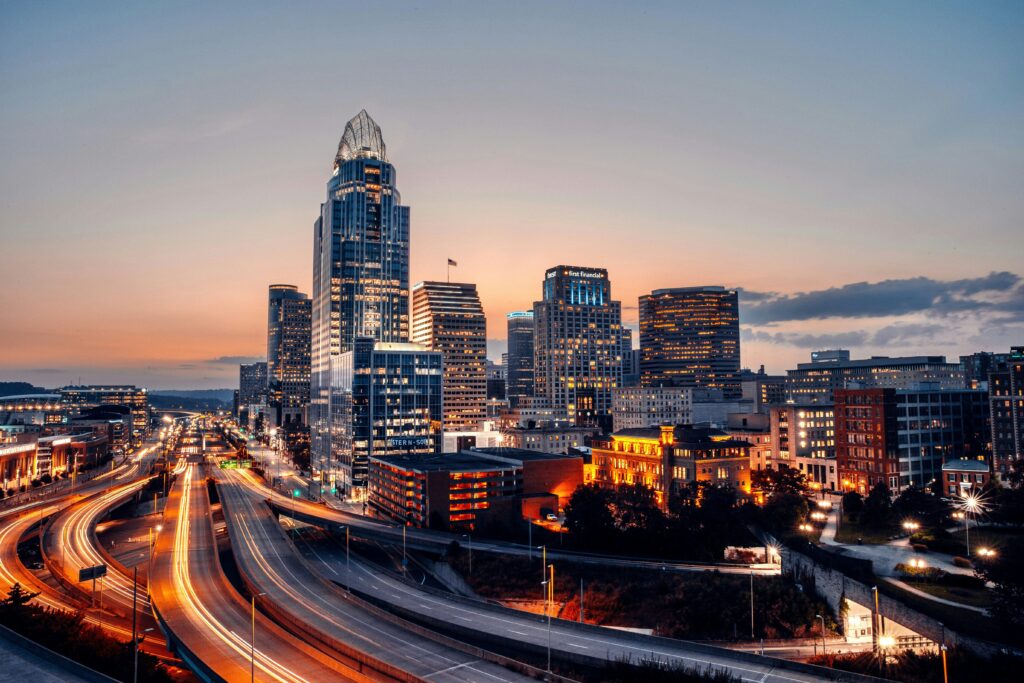
#1 – Cincinnati, Ohio
Cincinnati is a city built on hills above a river, platted in a grid that still largely holds, with a stock of pre-war buildings dense enough and intact enough that you can walk through entire neighborhoods and feel the original logic of the place. Most American cities this size were substantially reorganized by the postwar decades — stripped, widened, suburbanized around a hollowed core. Cincinnati was not spared that, but it was spared enough. The bones remained. And for the past decade, the city has been building on them in ways that most people outside the urbanist community haven’t noticed yet.
Start with transit, because transit is where stated intentions go to die in American cities, and Cincinnati is one of the rare cases where intentions have become funded, operational reality. In May 2020, Hamilton County voters passed Issue 7, a sales tax increase that locked in approximately $130 million annually for Metro — the regional bus system — for the next 25 years. That’s not a grant or a federal pilot program. It’s a generation of reliable funding, approved at the ballot. What has Metro done with it? The system is now operating at 117 percent of its pre-COVID ridership, at a moment when the national average sits around 70 to 80 percent. That gap reflects a system that used the pandemic to redesign its network, add 24-hour service on seven routes, and build toward something larger. The first two Bus Rapid Transit corridors — Hamilton Avenue and Reading Road — launch in 2027 and 2028, with dedicated lanes, prepaid boarding, and the kind of service reliability that actually changes where people choose to live.
Then there’s Connected Communities, the zoning reform Cincinnati’s city council passed in June 2024. It eliminates single-family-only zoning across large swaths of the city, allows missing middle housing by right in established neighborhoods, and reduces parking minimums citywide. The Congress for the New Urbanism chose Cincinnati for its 32nd annual congress that same year — an acknowledgment that the city is doing something worth studying. These two things together, the transit investment and the zoning reform, are what put Cincinnati at the top of this list. Most cities have one or the other. Cincinnati has both, funded and in motion simultaneously.
The economic base is broad: ten Fortune 500 companies, the University of Cincinnati, and Cincinnati Children’s Hospital — consistently ranked among the top three pediatric hospitals in the country. The arts infrastructure is genuine rather than aspirational, anchored by the Cincinnati Art Museum, one of the best free-admission collections in the United States, and the Cincinnati Symphony Orchestra. Over-the-Rhine, one of the largest intact nineteenth-century urban historic districts in the country, gives the city a physical character that most Midwestern metros can’t match.
The honest accounting includes crime, which is real and unevenly distributed in the way it is in most American cities of this size and history. The citywide rate looks alarming in the abstract. The neighborhood-level reality is more granular — violent crime sits roughly at the national average, has declined from 2019 levels, and is concentrated in areas that don’t overlap much with where the city’s urban revival is centered. That’s not a dismissal; it’s context that raw statistics don’t provide.
The political environment is worth noting. Cincinnati governs as a Democratic city inside an increasingly Republican state, and Ohio’s legislature has shown periodic interest in preempting local land-use decisions. Connected Communities was passed at the city level and doesn’t require state approval, but future reforms may face more friction. The direction is clear and backed by real investment; the variable is whether it has durable political support over the next two mayoral cycles.
Aesthetically, Cincinnati is one of the most underrated cities in the country. Its topography — steep hills dropping into dense valley neighborhoods — creates visual drama that flat grids don’t produce. The median home price sits around $248,000, in a state with a price-to-income ratio of 3.4, one of the most favorable in the country. For someone buying before the BRT corridors open and before Connected Communities produces its first wave of new supply, the math is still rational in a way it won’t be in five years.
This city is for the person who wants a complete urban experience — real transit, real walkability in the right neighborhoods, a genuine arts scene, world-class medical infrastructure — without the coastal premium those things typically demand. Watch the first BRT ridership numbers when Hamilton Avenue launches in 2027. That’s when the thesis gets tested against reality.
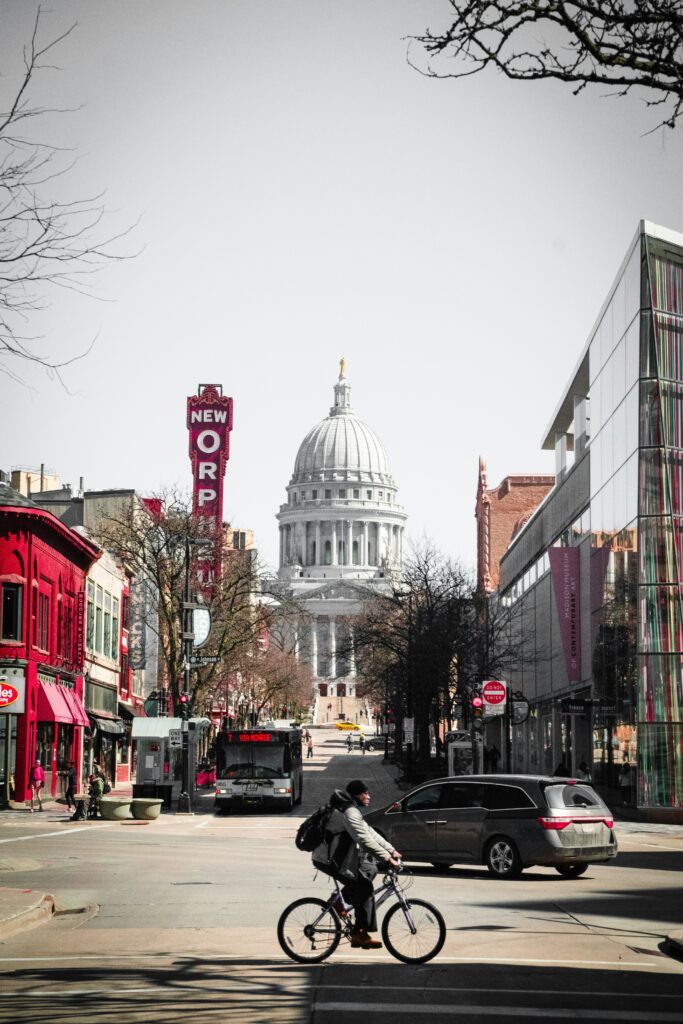
#2 – Madison, Wisconsin
Madison is the easiest city on this list to underestimate. It’s a state capital and a Big Ten college town, and those two facts tend to make people assume they already know what it is — a pleasant, educated, politically liberal city with good coffee and not much else going on. That assumption is wrong in ways that matter for anyone thinking seriously about where to put down roots over the next decade.
The infrastructure story is the place to start. Madison launched its first Bus Rapid Transit line — Rapid Route A — in September 2024, making it one of the only cities in its population range in the country with true BRT already operating. The route runs east-west along one of the city’s busiest corridors, with dedicated lanes, electric articulated buses, and service every 15 minutes. A second north-south line, Rapid Route B, has $118 million in federal funding committed and is on track for 2028. The city has paired this investment with a TOD overlay zone along BRT corridors — increasing permitted density, allowing ADUs, expanding building heights, and regulating parking access to create pedestrian-oriented development near stations. This is the correct sequence: build the transit, then change the zoning to take advantage of it. Most cities do neither. Madison has done both.
The safety profile is the strongest on this list and it’s not close. Violent crime in Madison runs 17.5 percent below the national average, and the city reported a 20 percent drop in overall crime in 2024 compared to 2023, followed by a further 16 percent year-to-date reduction through late 2025. Those are not rounding errors. For a household with children, or simply for someone who wants to walk home at night without running a mental calculation, Madison’s safety numbers are a meaningful differentiator.
The amenity case is built primarily on the university, which is both a limitation and an asset depending on what you’re looking for. UW-Madison produces an arts scene, a food culture, and an intellectual environment that cities three times Madison’s size would struggle to match. The Saturday Farmers Market on Capitol Square is among the largest in the country. The lakes — Mendota and Monona — give the city an aesthetic and recreational depth that is genuinely rare at this population. State Street functions as a real pedestrian corridor. UW Health is a world-class medical system. The honest limitation is that the university dominates the city’s character, which means Madison has more in common with Ann Arbor or Chapel Hill than with a conventional mid-sized American city, and some of what makes it excellent also makes it feel transient and campus-oriented in ways that can wear on people who aren’t affiliated with the institution.
The one signal worth watching closely is passenger rail. Madison has no Amtrak service today — the nearest station is 27 miles away — but a station study finalized in November 2025 has identified preferred sites for an extension of the Hiawatha Service from Milwaukee through Madison toward the Twin Cities. Federal corridor identification funding is in place. The city’s mayor has made this a budget priority. The realistic timeline is 2030 to 2032. Wisconsin’s Republican-controlled legislature has historically been the obstacle to passenger rail investment in the state, and that friction is real. But if the line materializes, it connects Madison to Chicago in roughly two hours, fundamentally changing the city’s relationship to the broader Midwest. That’s worth tracking.
Housing prices are higher than the Midwest average — median around $360,000 — which is the primary tension in the wealth-building argument. Madison is affordable relative to coastal cities but not relative to its Midwestern peers. The counterargument is that the city is building infrastructure ahead of its growth curve. The population is projected to grow 32 to 35 percent by 2050, the BRT system will raise values along its corridors, and the TOD overlay zoning will eventually translate into more supply. Buying before that supply arrives and before the passenger rail connection is confirmed is the version of the Madison thesis that makes financial sense.
The political environment is a consistent tailwind. Madison governs as one of the most progressive cities in the Midwest, the state’s urbanist policy environment is among the most active outside of the coasts, and the comprehensive plan is explicitly oriented around infill, density, and transit investment. The risk is at the state level, where the legislature can and sometimes does constrain what cities are permitted to do. That tension is structural and not going away, but it hasn’t yet stopped the city from doing what it has done.
Madison is for the person who values safety and quality of life above all other variables, who wants a genuinely excellent place to live today rather than a bet on what a place might become, and who is willing to pay a modest Midwest premium for it. It is the most immediately livable city on this list. The open question is whether its prices stay rational long enough for the next wave of buyers to get in before the infrastructure investment gets fully priced in.
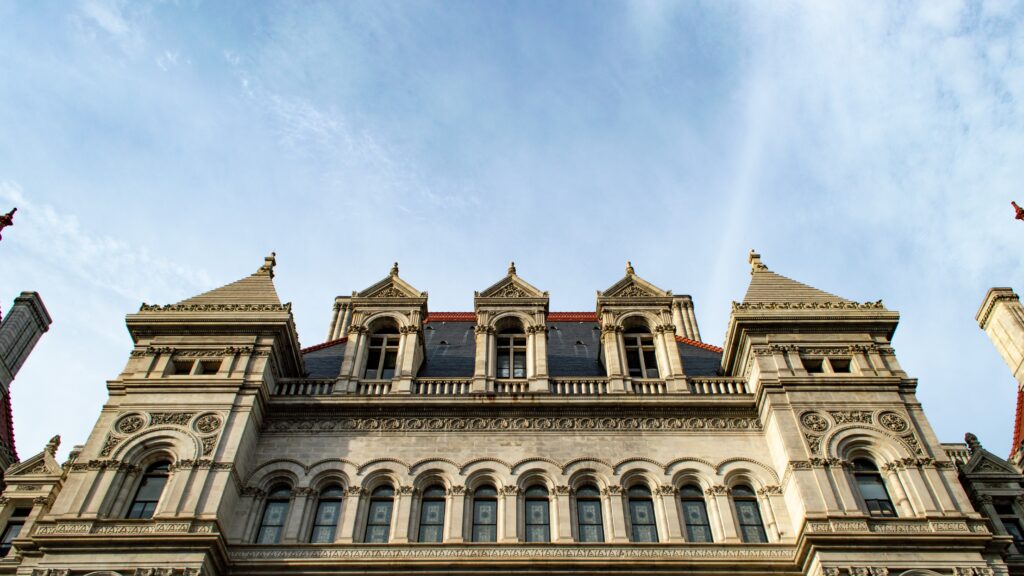
#3 Tie – Albany and Syracuse, New York
Every list like this one treats cities as isolated units — score the walkability, count the amenities, rank and move on. Albany and Syracuse resist that treatment.
Considered separately, each has a case that is real but incomplete.
Considered together, they form the most distinctive and arguably most consequential entry on this list: two affordable, walkable-by-Midwest-standards, Amtrak-connected cities anchoring opposite ends of the most significant government-backed industrial investment in American history.
That investment is the semiconductor corridor New York State has been assembling along the I-90 from Albany to Buffalo.
At the Albany end sits the NY Creates NanoTech Complex — the nation’s first National Semiconductor Technology Center flagship facility, home to the first publicly owned High NA EUV Lithography Center in North America, and the R&D hub for a $10 billion partnership that includes IBM, Micron, Applied Materials, Tokyo Electron, and partners from across the global chip industry. Over 10,000 people in the Albany area are already directly employed in semiconductor R&D, manufacturing, and supply chain. GlobalFoundries is in the middle of an $11.6 billion expansion of its Fab 8 in Malta, 25 miles north of Albany, that began in 2025.
Sometimes I have to remind myself that $1 billion is not one hundred millions, but one thousand millions. So that’s ten-thousand millions, and eleven-thousand, six-hundred millions.
That’s a lot, but then again, it’s nothing.
At the other end of the corridor, Micron broke ground in January 2026 on a $100 billion semiconductor megafab in Clay, New York — 14 miles north of Syracuse, the largest private investment in New York State history, projected to create 9,000 direct jobs at average salaries over $100,000 and over 40,000 indirect jobs across the region. By 2030, one in four American-made chips is expected to come from within 350 miles of Upstate New York.
Housing prices in both cities have not yet caught up to what this means. That is the thesis.
Albany today is a city of 101,000 with a Walk Score of 65, a functioning BRT system operated by CDTA that logs 18 million boardings annually across the Capital District, and a direct Amtrak connection to Penn Station that runs 2.5 hours.
It is a state capital with the employment stability that implies, a pre-war street grid that produces genuine walkability in neighborhoods like Center Square and Washington Park, and entry-level home prices around $220,000.
The honest limitations are also real: Albany has a safety perception problem that its own coverage describes bluntly — downtown crime is elevated, the streets don’t always feel safe at night, and the city carries the “Smallbany” reputation for a reason. The amenity base is thin. The arts scene is institutional rather than organic.
These are headwinds, and anyone moving to Albany should see them clearly.
What the city also has is a state government that has committed over a billion dollars to the NanoTech Complex expansion, a redevelopment plan for the Empire State Plaza that would repair the single most destructive act of urban renewal in the city’s history, and a location at the intellectual center of the corridor that positions it to capture the supply-chain, design, and research workforce that semiconductor manufacturing requires.
Syracuse
Syracuse, 60 miles west on the I-90, is the higher-upside, higher-risk version of the same bet.
Walk Score 57, home prices around $150,000, and a downtown that is in the middle of the most consequential urban infrastructure project happening in any American city its size: the demolition of the I-81 viaduct.
The elevated highway that has divided Syracuse’s downtown from its Near East Side neighborhoods since the 1960s is coming down, replaced by a surface-level community grid. Construction is active, the viaduct demolition is expected around 2028, and the project will open 12 to 15 city blocks of developable land in the heart of downtown. Federal funding alone totals $180 million for the complete streets components.
The planning firm leading the design — Dover, Kohl & Partners — is among the most respected new urbanist practices in the country.
The Micron facility 14 miles away has already moved the housing market: prices are up 12 percent since 2023, average one-bedroom rents are still 26 percent below the national average, and the region is estimated to need 40,000 new housing units to absorb the incoming workforce. Only 384 apartments were built near the site in a two-year window. The gap between supply and projected demand is the buying window.
Both cities are connected to New York City by Amtrak — Albany in 2.5 hours, Syracuse in under 5.
For a knowledge worker who needs to be in New York occasionally but cannot afford to live there, that access is a genuine quality-of-life asset that neither city’s real estate market has fully priced in.
The honest framing is this: Albany and Syracuse are not for everyone on this list.
Cincinnati and Madison are cities you move to because they are already excellent and getting better. Albany and Syracuse are cities you move to because you believe in something that hasn’t fully arrived yet, and you want to be in before it does.
The corridor thesis is grounded in concrete, recent, documented investments — not in hope.
But the timeline is long, the current conditions are genuinely rough in places, and the reward requires tolerating a city that is visibly in transition rather than one that is visibly thriving. For the right person, that is exactly the point.
Closing
These three entries share a quality that is harder to quantify than a Walk Score but more predictive of long-term value: demonstrated institutional will.
- Cincinnati passed its zoning reform and funded its transit.
- Madison launched its BRT and aligned its zoning to follow.
- Albany and Syracuse are positioned at the center of an industrial transformation that the country’s housing market has not yet priced in.
In each case, the work is not planned or proposed — it is underway. That distinction is the whole point.